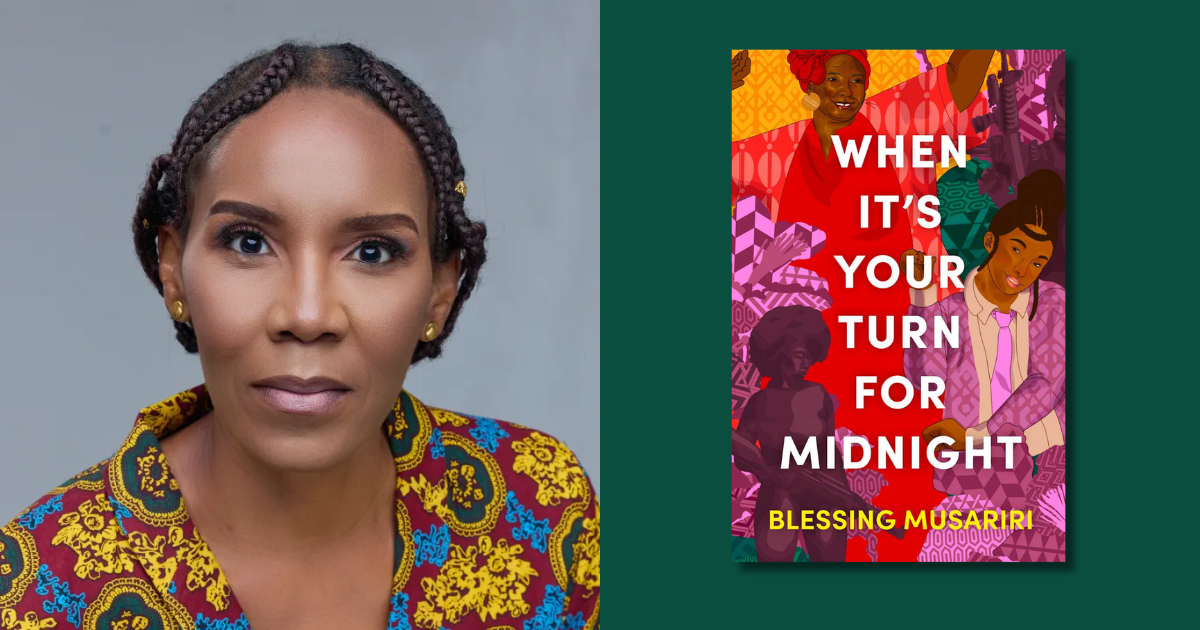
Zimbabwean writer Blessing Musariri has been named a finalist for the 2026 Kirkus Prize with When It’s Your Turn for Midnight, putting a Zimbabwean young adult novel in contention for one of the most closely watched book prizes in the United States.
Musariri is the only African author among this year’s 18 finalists across fiction, nonfiction and young readers’ literature. Her novel is competing in the Young Readers’ Literature category, in the Young Adults subgroup.
Published in the United States by Lerner Publishing Group’s Carolrhoda Lab imprint in April 2026, When It’s Your Turn for Midnight centres on 15-year-old Chianti Minana, whose understanding of her family changes after her mother tells her that the man she has always known as Baba is not her biological father.

Chianti leaves for her grandmother’s home in Mutare, where she encounters four elderly friends who fought alongside one another during Zimbabwe’s War of Independence. As Chianti becomes involved in helping them promote their secondhand clothing business on TikTok, she discovers photographs and a notebook that lead her towards a history the women have largely kept to themselves.
The novel’s setting gives the story a distinctly Zimbabwean frame, while its concerns—family secrets, memory, generational silence and the unfinished relationship between past and present—extend beyond it.
The Kirkus Prize is awarded annually by Kirkus Reviews, with finalists selected from books that received starred reviews from the publication. Winners in each of its three categories receive $50,000, making the prize one of the more substantial literary awards in the United States.
Musariri shares the young readers’ shortlist with authors including Elizabeth Acevedo, who is appearing among the finalists for the third time. Acevedo was previously shortlisted for The Poet Xand Clap When You Land.
The 2026 winners will be announced on October 7 at a ceremony at Tribeca Rooftop in New York.
For Musariri, the nomination puts When It’s Your Turn for Midnight before a large American literary audience less than six months after its U.S. publication.
 WhatsApp
 X
X
 Facebook
 LinkedIn