A career in African literary spaces can be built almost entirely on the goodwill of a handful of people, and ended just as fast by the same handful turning the other way.
Oghenechovwe Donald Ekpeki's board seat at the Science Fiction and Fantasy Writers Association is one clear example: voted away within 48 hours of allegations becoming public, quietly reversed in substance seven weeks later when the organisation that had vouched for him retracted its most serious claims, restored again in practice by a publisher's personal fundraiser after an accident in 2026. But the pattern isn't unique to him. It shows up whenever a writer's standing depends less on a body of work than on staying in favour with the two or three people who happen to run the institution deciding who gets seen. A prize judge moves on, or a benefactor loses interest, or an editor takes a project elsewhere, and in most corners of publishing that's a minor, forgettable event. In a field this small, it can be the whole story of whether a career continues.
That's not a flaw specific to any one case. It's close to how the entire apparatus of African literary recognition actually works: prizes, anthologies, board seats, workshop invitations, all of it. Strip away the awards ceremonies and the shortlist announcements, and that machinery turns out to be remarkably small. Two institutions do most of the work of deciding what counts, on the continent and off it.

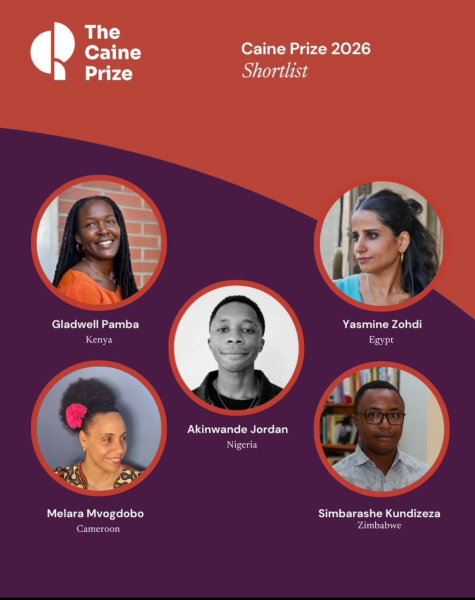
The Caine Prize for African Writing has occupied that role since 2000. It's sometimes called "the African Booker," a nickname earned honestly: the prize is named after Sir Michael Caine, a businessman who chaired the Booker Prize's own management committee for nearly 25 years before his death. Commentators have argued the Caine Prize does more than reward good short fiction. It effectively regulates what gets to count as African literature in the first place, shaping which stories reach international publishers, which writers get invited into anthologies, and which names circulate at festivals from London to Lagos.
That kind of concentrated authority is fragile in ways awards bodies rarely advertise. In 2019, the Caine Prize removed a story from its own shortlist, Tochukwu Okafor's "All Our Lives," after judges found it failed to properly credit an earlier work it drew from. The prize's own gatekeeping apparatus, in other words, had to police itself mid-cycle, a reminder that the authority to decide who gets in is also the authority to decide, after the fact, who gets pulled back out.
The genre-fiction equivalent is smaller still. The Nommo Awards, presented annually by the African Speculative Fiction Society since 2017, cover four categories: best novel, novella, short story, and graphic novel. The prize money for all four, three thousand dollars a year, has come from a single benefactor, the British-Nigerian technologist Tom Ilube, since the awards began. Nearly a decade in, the entire financial infrastructure of the only pan-African award for science fiction and fantasy rests on one man's continued willingness to write the cheque.
ASFS says as much on its own website, and trade outlets like File 770 and Locus report the sponsorship every year without much comment, so this isn't hidden information. It's rarely put in these terms, though: the genre most concerned with imagining African futures has an award with no more institutional backing than one person's ongoing interest. That's visible because ASFS names Ilube every year. The Caine Prize's funding is a murkier picture. Critics have argued that its funding comes predominantly from British and American sources, and that this sits uneasily with the prize's stated postcolonial mission, with Western judges risking a preference for submissions that read as trauma or poverty narratives over more varied depictions of African life. That's a reading of the prize's effect, not a disclosed account of who specifically funds it.
The contrast between the two prizes is instructive regardless of how that gap gets filled. Nommo's dependency is total and named: one benefactor, three thousand dollars, no other visible income stream, disclosed openly every year. The Caine Prize's dependency is broader and less legible: an institution with a quarter-century of Booker-family administrative continuity behind it, funded by sources its critics can characterise but not yet itemise. Neither structure is obviously healthier than the other. A single donor can walk away on a whim; a diffuse funding base can quietly encode a set of tastes and assumptions that no single decision ever exposes to scrutiny.
ASFS itself may be moving toward the second model. In October 2025 the society incorporated as a Community Interest Company in the UK, a legal structure that carries its own disclosure obligations and suggests an organisation outgrowing a single patron's goodwill as its only institutional footing. What that restructuring means in practice, whether it broadens Nommo's funding base beyond Ilube or simply formalises the same dependency in a different legal shell, isn't yet public. It's worth watching, because it's the clearest sign either institution has given that it recognises the problem this section is describing.
What's harder to find, on either side, is a funder willing to say plainly why African literary prizes are worth underwriting, and what they expect in return. Prize money is rarely accompanied by public terms. Writers who win, and writers who don't, are left to infer the taste being rewarded from the shortlists themselves, which is its own kind of gatekeeping: the rules are visible only in their outcomes.
Ask why they carry this much weight in the first place, more than prize culture does in most other regions, and the honest answer has less to do with prestige than with absence. Prizes have become the infrastructure because so little else exists to take their place.
Nigerian novelist A. Igoni Barrett made this case plainly when he helped persuade Graywolf Press to establish its African Fiction Prize in 2018. Nigeria's literary infrastructure, he told Poets & Writers, "cannot support creative work": no MFA programs, no realistic path to a magazine or university position that pays a writer to keep writing, which is why so many young Nigerian writers eventually leave for an American MFA if they can find a way to fund one. Graywolf's prize, a twelve-thousand-dollar advance and publication for a first novel by an author living in Africa, exists explicitly to shorten that path, standing in for a system that was never built rather than rewarding one that already works.
That makes it a harder case than Nommo or Caine. Ilube's money and the Caine Prize's opaque funders are both, in their way, about who gets to anoint talent that already has somewhere to go. Graywolf's prize, and others modeled on the same logic, are trying to create somewhere to go in the first place. Folding every prize in this piece into the same critique would be too easy. A prize built to compensate for missing infrastructure is a different problem than a prize built to sit atop infrastructure that already exists elsewhere and simply route recognition through a Western institution's taste, even though the two get talked about in the same breath because they hand out similar-looking cheques.
But even the more defensible version carries a cost. A writer whose career depends on winning a prize built to substitute for infrastructure is still, functionally, dependent on the prize existing: on the judges' taste in a given year, on a funder's continued interest. Durable infrastructure doesn't require any single decision to be made correctly, year after year, by the right people, the way a university keeps running regardless of whether one grant committee has an off year. A prize doesn't have that cushion. That's not an argument against prizes like Graywolf's. It's an argument that no one should mistake them for the infrastructure they're standing in for, including the writers who most need them to be.
Even inside a field that already runs on a handful of gatekeepers, access to those gatekeepers isn't distributed evenly. It tracks proximity, to the US and UK, to English-language MFA programs, to a small circuit of workshops that assume a writer can take six consecutive weeks away from paid work. That proximity has quietly become its own credential, separate from the writing itself.
The clearest fault line runs between diaspora and continent-based writers. When a diaspora writer's prose gets criticized as flat or over-familiar, the unstated comparison is usually to continent-based writers who have closer access to lived material but far less institutional backing, no agents pitching them at international fairs or MFA cohort behind them. A handful of names, Chimamanda Ngozi Adichie, Taiye Selasi, Teju Cole, Yaa Gyasi, have become so visible internationally that critics now treat them as shorthand for "African literature" itself, and some of those same critics argue that success has come partly by presenting a version of the continent that reads as legible, even sanitized, to a Western audience. That critique has its own pushback: framing diaspora work as inauthentic or "not really African enough" can shade into its own kind of nativism, one that polices identity rather than engaging with what a writer actually made. Both positions are live in the field right now, and neither has won.
The workshop pipeline tells a quieter version of the same story. Clarion and Clarion West, the two most prestigious speculative-fiction workshops in the English-language world, each run six intensive weeks in Seattle or San Diego, cost several thousand dollars in tuition, and assume a writer can simply leave their life for that stretch. Clarion West's own need-based scholarship is pegged to roughly $3,200, close to the full cost of tuition, which is itself an admission of how steep that bar is even for writers already living in the US. A Nigerian or Kenyan writer holding down a job faces the same tuition on top of visa logistics and international travel most American applicants never have to think about. 'Pemi Aguda, one of the few Nigerian writers to attend Clarion in recent years, made it in 2019, but only on a dedicated Octavia E. Butler Memorial Scholarship from the Carl Brandon Society, built specifically to get writers of color into a room that wouldn't otherwise be affordable to them. She's since spoken about arriving too frazzled from the transition to plan her workshop story in advance, writing it in her first week regardless. That she made it through says something good about her. That it took a scholarship built around exactly this gap says more about how the pipeline treats people who don't need one.
This doesn't mean continent-based writers are shut out entirely, or that diaspora writers haven't earned what they've achieved. But the field's version of a level playing field has a floor tilted toward whoever already had a visa, savings to cover a six-week gap in paid work, and enough proximity to the institutions doing the choosing to be legible to them in the first place.
Go back to where this started. Ekpeki's board seat was won and lost inside a system built almost entirely on relationships with a handful of people who happened to be paying attention. That wasn't an aberration in an otherwise sound structure. It was the structure, working exactly as designed, for a field where the prizes stand in for publishers that don't exist, the funding behind the prizes is either concentrated in one donor or too opaque to name, and the workshops that shape a writing career assume an access to time, money, and geography that most African writers simply don't have.
The people running these institutions didn't build them to work this way on purpose. A charity registered in London, a single benefactor writing an annual cheque, a six-week workshop in Seattle: each makes sense on its own terms, as a reasonable answer to a real gap. The problem is what happens when a whole field ends up depending on a stack of reasonable answers that were never asked to bear this much weight.
Less fragile versions of this are possible, and pieces of them already exist. ASFS's move to incorporate as a Community Interest Company is one small step in that direction, a legal structure that comes with disclosure obligations a single-benefactor prize never had to meet. A pooled, continent-based prize infrastructure fund, drawing on multiple funders rather than one patron or one opaque grantmaking body, would spread the risk currently sitting entirely on Tom Ilube's continued interest or the Caine Prize's undisclosed backers. Basic disclosure requirements, who funds a prize and what a judging panel is told to look for, would turn taste that's currently visible only in shortlists into something writers could actually see and argue with. That wouldn't fix the workshop-access problem on its own, but a scholarship model built the way Aguda's was is at least a working template rather than a hope.
Nothing here has happened yet, and there's no guarantee it will. The alternative is a field that keeps mistaking a handful of reasonable people's ongoing goodwill for an institution, until the goodwill runs out and there's nothing under it.
 WhatsApp
 X
X
 Facebook
 LinkedIn