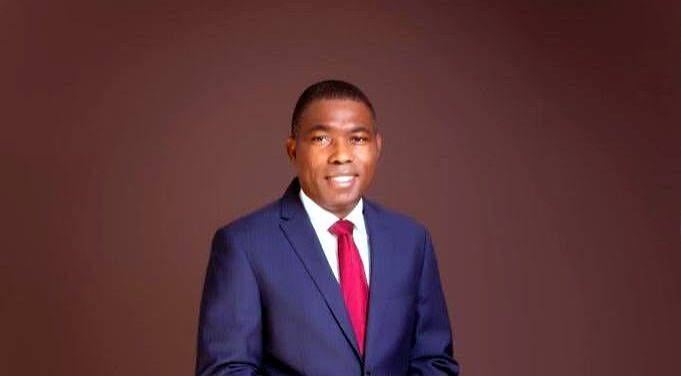
Adebayo Wants 75,000 Megawatts of Electricity in Four Years. A Month Earlier, He Called the Same Number a Target for 2050.
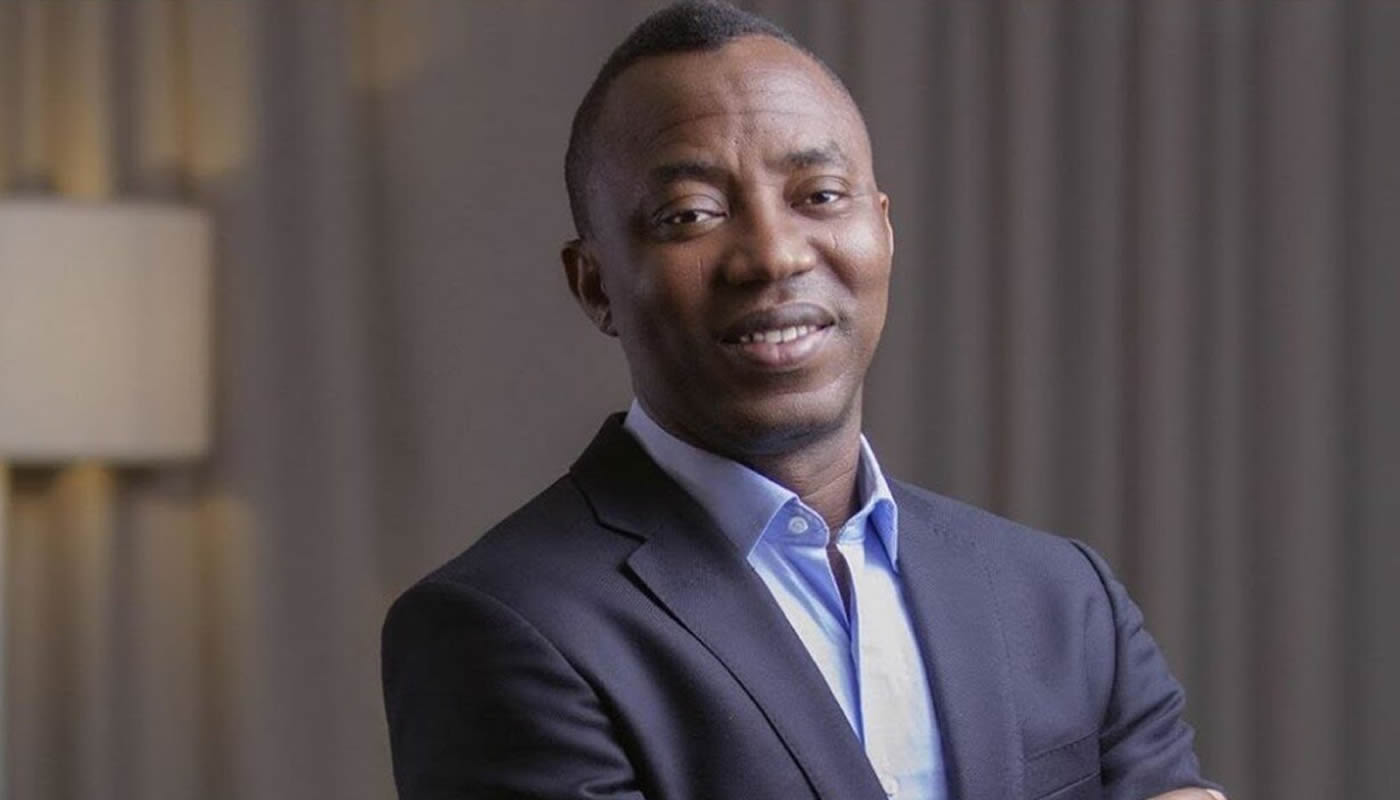
On 9 September 2026, Social Democratic Party presidential candidate Prince Adewole Adebayo stood at the Shehu Musa Yar'Adua Centre in Abuja and unveiled "Farewell to Poverty and Insecurity: Governance and Accelerated Development, Blueprint of a New Nigeria, 2027 to 2031," a document he described as a departure from sloganeering. "We have submitted our thesis to Nigerians," he said. "Mark us. Evaluate us. Contradict us." That is an invitation this publication is happy to take up, and the document's own headline figures are the place to start.
The most striking commitment is on power. Adebayo pledged that an SDP administration would pursue a four-year programme target of 75,000 megawatts of electricity, generated from Nigeria's own resources. To put that number in context, this publication has previously reported, drawing on Africa Check's review of the sector, that Nigeria's highest ever recorded peak generation evacuation, reached in March 2025, was 5,801.84 megawatts. Adebayo is promising, within one term, to reach roughly thirteen times that figure. He would also be exceeding, by a wide margin, a target Tinubu himself set as a candidate in 2023, when he promised to make 15,000 megawatts distributable nationwide within four years, a target Power Minister Adebayo Adelabu has since quietly revised down. Adelabu told a ministerial briefing that the government is now aiming for 8,000 megawatts before the end of Tinubu's first term in 2027, little more than half of what candidate Tinubu promised and a fraction of what Adebayo is now promising in the same timeframe.

What makes the 75,000 figure harder to evaluate is that Adebayo has described it differently on different occasions. A month before the manifesto launch, speaking to journalists and members of the Middle-Belt Forum, he proposed that the country target between 50,000 and 75,000 megawatts of electricity generation capacity by 2050, a 24-year planning horizon, arguing that any candidate not thinking in those terms was "behind time." At the September launch itself, by contrast, multiple outlets covering the same event describe 75,000 megawatts as part of a four-year deliverable inside the 2027 to 2031 blueprint. Those are not close variations on the same idea. A generation target pursued over 24 years and the identical number promised inside a single presidential term imply completely different scales of investment, financing and industrial buildout, and neither the candidate nor the SDP has publicly reconciled which of the two he is actually running on.
The refinery promise runs into a different kind of problem: recent, well-documented history. The blueprint commits to reviving Nigeria's three state-owned refineries, at Port Harcourt, Warri and Kaduna, into what Adebayo calls four highly functional public plants, alongside 36 new modular refineries. Those three state refineries have a combined nameplate capacity of roughly 445,000 barrels per day and have not produced fuel at commercial scale in over a decade, despite repeated, heavily publicised restart attempts. Port Harcourt and Warri were both relaunched with fanfare in late 2024, with Warri reaching 78,000 barrels a day and Port Harcourt reported at various points between 37 and 70 percent of installed capacity, before both were shut down again by May 2025. By November 2025, NNPC's own group chief executive, Bayo Ojulari, was publicly acknowledging that all three plants were operating below international standards, and the company has since brought in outside technical partners, signing a memorandum of understanding with two Chinese firms in April 2026 to explore rehabilitating Port Harcourt and Warri rather than declaring the turnaround complete. A promise to make these same three assets fully functional within a single term is not competing against an untested hypothesis. It is competing against the specific, recent, repeated failure of the exact plants it names.
The petrol price promise sits closest to the ground, since Nigerians can check it against what they are paying at the pump today. Adebayo has pledged to bring petrol down to a maximum of N200 per litre, arguing that domestic refining capacity would insulate Nigeria's market from the volatility of global crude prices. As of 13 September 2026, petrol was selling between N1,400 and N1,450 per litre in Lagos and Abuja, roughly seven times Adebayo's target, and the immediate cause of that week's increase undercuts his own argument. Dangote's refinery, already Nigeria's largest and most functional by a wide margin, raised its own gantry price for petrol by 6.7 percent in a single move on 12 September 2026, its fourth increase in 22 days, because Brent crude climbed past $100 a barrel amid supply disruptions tied to attacks on tankers in the Middle East. If a fully operational, world-class domestic refinery is still raising prices in lockstep with a global crude spike it had no hand in causing, the specific mechanism Adebayo is proposing, that more domestic refineries would insulate Nigerian pump prices from international markets, is contradicted by the one domestic refinery already running at scale.
On insecurity, the manifesto's most quotable line is also its least quantifiable. Adebayo told the launch audience that voting out the current government in 2027 would represent progress, though outlets differ on exactly how he phrased what that progress amounted to. Vanguard quoted him saying the change would go "60 per cent of the way towards changing the way things are done," while other coverage of the same remarks rendered it as a pledge to eliminate roughly 60 percent of banditry through the act of voting alone. Neither version comes with a metric, a baseline or a method for measuring it against, which makes it a rhetorical flourish rather than the kind of checkable commitment the rest of the document claims to offer.
Adebayo's other major line at the launch was a demand, not a promise: he challenged Tinubu to a public debate and asked directly where the money saved from petrol subsidy removal had gone, alongside spending on security, compressed natural gas and electricity. That demand is not baseless. Some of the underlying figures do exist in public records, NNPC reported a 60 percent surge in remittances to the Federation Account in March 2026 alone, for instance, though no consolidated public accounting ties subsidy savings specifically to security, CNG and electricity spending in the itemised way Adebayo's question implies exists.
This publication sent a request for comment to the SDP's presidential campaign, asking the party to reconcile the 2050 and four-year framing of its electricity target, and to provide a costed financing plan for the refinery and petrol price commitments. As of publication, the campaign had not responded.
Adebayo built his launch around a specific promise: that his party would be judged on measurable policies rather than slogans, and that Nigerians should hold the document accountable to its own numbers. Held to that standard, the blueprint has at least one internal contradiction over what its central energy target actually is and when it is due, one commitment that depends on three specific assets succeeding where they have failed for over a decade, and one price promise whose stated mechanism is undercut by the pricing behaviour of the one refinery in the country that already works. None of that makes the underlying diagnosis, that Nigeria's power grid, refining capacity and fuel prices are in crisis, any less accurate. It just means the "farewell" in the title is, for now, a promise rather than a plan.
 WhatsApp
 X
X
 Facebook
 LinkedIn