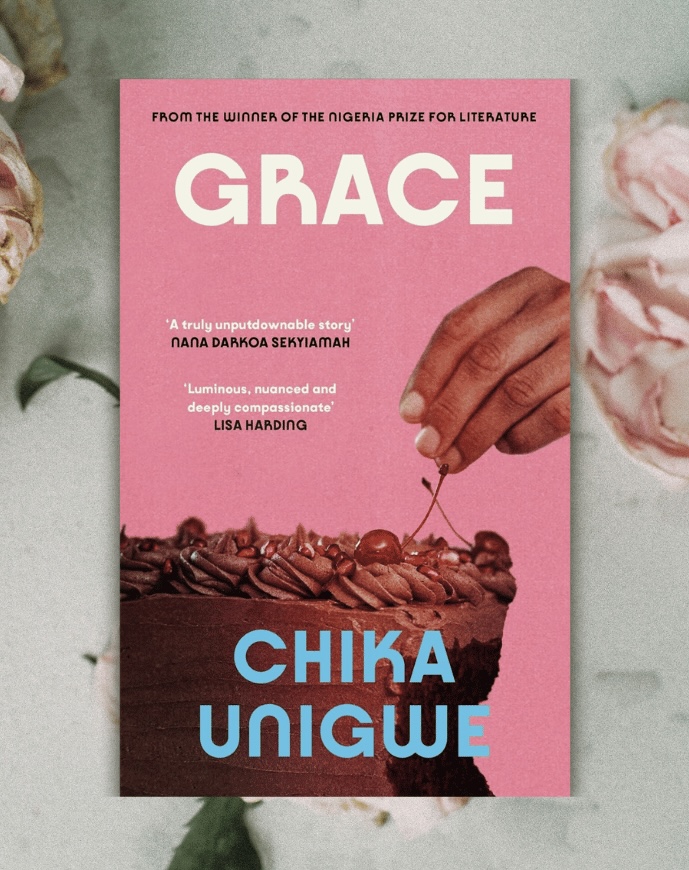
Every year, on the birthday of the daughter she has not seen in twenty-six years, Grace eats a cake.
It is an odd ritual for a woman who has built an apparently settled life. Grace is a respected midwife in Enugu, the owner of a successful maternity home, a wife and the mother of twin daughters. She has the professional standing and domestic stability that might suggest that the difficult parts of her life are behind her. But the cake is a reminder that there is another life beneath the one she has constructed, one that began when she was fifteen and became pregnant by a sixteen-year-old boy named Ben.
That is where Chika Unigwe’s Grace begins to complicate the meaning of motherhood. The novel is not interested in presenting motherhood as an uncomplicated state of fulfilment, nor does it divide its women neatly into good mothers and bad ones. Instead, it places them in a web of circumstances in which love, shame, money, social reputation, infertility, family expectation and survival are constantly colliding.

The title itself carries an uneasy irony. Grace is the name of the protagonist, but it sits close to disgrace, the condition that has shaped so much of her life. As a teenager, Grace becomes pregnant, and while Ben is able to retreat from the consequences with remarkable ease, she becomes the person upon whom the shame of the pregnancy is concentrated. Ben’s mother verbally abuses her, calling her a prostitute, while Grace’s own family becomes increasingly concerned with the social consequences of her pregnancy. Eventually, her mother helps her carry the pregnancy to term and abandon the baby.
The asymmetry is difficult to miss. Two teenagers are involved in the pregnancy, but only one is treated as though something shameful has happened to her.
This imbalance is one of the quiet violences running through Grace. The pregnant girl is expected to accept the biological consequences of sex, but she is not necessarily allowed to exercise any meaningful authority over what happens next. Her body becomes the evidence of her failure, while the boy is permitted to continue with his life. Grace’s pregnancy therefore becomes less a private event than a social offence, one that threatens the reputation of her family and must be managed accordingly.
Years later, Grace has turned that experience into the basis of her profession. Her maternity home officially provides conventional medical services, but it also performs another function. Pregnant girls and young women who have nowhere to turn can come to her, receive accommodation and medical care, give birth, and then relinquish their babies to wealthy couples who want children and can afford them. The arrangement sits uncomfortably close to the baby-factory economy that has become one of Nigeria’s most disturbing reproductive scandals, but Grace insists on the distinction between what she does and the exploitation associated with illegal baby factories. The money paid by the prospective parents largely goes to the young woman who carried the pregnancy, giving her the possibility of returning to school, leaving home or beginning another life.
That distinction matters because Grace does not see herself as a trafficker. Nor does the novel force the reader to see her that way.
Instead, Unigwe constructs an ethical grey zone and leaves Grace inside it.
If a teenage girl is poor, pregnant and unsupported, what exactly constitutes a choice? Keeping the child may mean expulsion from school, rejection from her family or a life of economic dependence. Giving the child away may leave a wound that lasts for decades. The wealthy couple receiving the baby may genuinely love and care for it. The young woman surrendering the baby may genuinely want to start again. The arrangement can therefore contain compassion and exploitation at the same time.
That is what makes Grace’s work so morally uncomfortable. It is not easy to condemn because it has emerged from a system that has already failed the women who enter her clinic.
Grace knows this because she has been one of them.
The decision to abandon her first child is the wound around which the rest of her life has been organised. She has two daughters, a husband and a successful career, yet the child she gave away remains present in the annual ritual of the birthday cake. The ritual becomes a private memorial, a way of maintaining a connection to a daughter whose absence has never stopped being real.
When Grace’s estranged mother eventually reappears, the carefully constructed distance between past and present begins to collapse. The novel moves between 2020 and Grace’s teenage years in the 1990s, allowing the reader to see how the young girl who once had very little control over her circumstances becomes the adult woman who creates a system through which other women can make similarly painful decisions.
The symmetry is unsettling.
Grace once gave up a baby because she believed she had no other viable option. Now she helps other women give up babies because she understands what it means to be trapped by circumstances. Her clinic is therefore both an act of compassion and a continuation of the original wound. She has transformed her trauma into a profession, but she has not escaped it.
This is also where Grace becomes a novel about mothers rather than simply a novel about one mother.
There is Grace, who is both a mother to the twin daughters she has raised and to the daughter she surrendered. There are the young women who arrive at her clinic pregnant and are treated by society as mothers in the biological sense while being denied the social legitimacy of motherhood. Their pregnancies make them vulnerable, but their decision to keep their children can be treated as irresponsible. There are the wealthy women who come looking for children, whose desire for motherhood is considered legitimate and urgent because they have money, marriage and social respectability on their side. Their infertility may cause them pain, but it does not carry the same public stigma as teenage pregnancy.
Then there is Ben’s mother, perhaps the clearest embodiment of motherhood as an instrument of social protection. Her hostility towards Grace is not merely personal cruelty. She is defending her son from consequences that society is willing to place almost entirely on the girl. She knows the rules and understands that the rules favour her.
Grace’s own mother is more difficult to judge.
She helps her daughter through the pregnancy, but she also participates in the decision to abandon the child. Her actions emerge from fear of what Grace’s pregnancy will mean for the family. She is neither a monster nor a saint. She is another woman negotiating a society in which a daughter’s pregnancy can become a family crisis and where protecting the family name can appear, even to a mother, more urgent than protecting the daughter from a decision she may regret for the rest of her life.
This accumulation of mothers is one of Unigwe’s smartest structural choices. The novel keeps multiplying the circumstances around motherhood until simple moral judgement becomes inadequate. No single woman can carry all the blame because each is responding to a different form of pressure.
The wealthy woman desperate for a child, the teenage girl desperate not to lose her future, the mother desperate to protect her family, the woman who has already lost a child and the woman who makes a living helping others relinquish theirs are all participating in the same system, although from radically different positions within it.
Motherhood therefore becomes less a natural category than a social one.
Who gets to be recognised as a mother? Who gets to decide what is best for a child? Who is forgiven for failing? Who is condemned? Who has the money to turn motherhood into a choice rather than an obligation?
These questions give Grace much of its force.
Yet the novel’s concentration on this larger argument occasionally works against the characters themselves. Grace is a short, deliberately compressed book, and Unigwe’s restraint is often one of its strengths, but there are moments when the compression leaves secondary characters feeling more functional than fully realised. Some appear principally to illuminate a particular aspect of motherhood, class or social pressure, and the reader is sometimes given just enough of their circumstances to understand their role without quite enough to inhabit their inner lives.
This is particularly noticeable because the novel sets up such a rich network of relationships. The mothers do not merely represent different versions of motherhood; they could have formed a much more expansive psychological map of the ways women respond to the same social pressures. More space might have allowed some of these relationships to develop with greater complexity, especially where affection, resentment and obligation overlap. The spareness that makes the novel readable also occasionally makes its emotional world feel narrower than its subject deserves.
The same tension appears towards the end. Unigwe has spent much of the novel resisting easy moral conclusions, allowing Grace’s actions to remain troubling without reducing her to either victim or perpetrator. The ending therefore carries the difficult task of bringing together Grace’s past, her guilt and the consequences of the life she has built. There is emotional force in the reckoning, but the resolution feels somewhat more conclusive than the novel’s earlier moral ambiguity prepares us for. After spending so much time complicating the meaning of choice, responsibility and motherhood, the final movement could have afforded greater uncertainty.
This does not undo the novel’s achievement, but it does slightly reduce the power of its ambiguity. The strongest sections of Grace are precisely those in which Unigwe refuses to tell us what to think about her protagonist. The closer the novel moves towards resolution, the more some of that productive discomfort begins to settle.
Still, the book remains compelling because its central questions are larger than Grace herself.
The novel is also attentive to the particular moral language through which Nigerian society regulates women. Pregnancy outside marriage is treated as evidence of female failure. Infertility carries its own pressures. Marriage offers social protection while also creating expectations about reproduction. Religion and family become sources of both comfort and surveillance. Women are expected to want motherhood, but only under the right circumstances. They are expected to be sexually responsible, but the consequences of sexual irresponsibility remain heavily gendered.
Unigwe’s achievement is that she does not turn these pressures into a simple argument against motherhood. Instead, she examines the strange distance between wanting a child and being permitted to mother one.
The babies in Grace move through this distance. One woman gives up a child because she cannot afford to keep her. Another wants that child because she cannot have one herself. A third profits from facilitating the transaction. Around them is a society that has already decided which desires are respectable and which are shameful.
The novel’s COVID-era setting adds another layer to this atmosphere of vulnerability. Set in 2020, it places Grace’s private reckoning against a period when movement, healthcare and ordinary social contact were suddenly precarious. The pandemic does not become the whole subject of the novel, but it gives the present-day sections an enclosed quality, as though the world itself has been forced into a pause while Grace’s buried past catches up with her.
Stylistically, Unigwe chooses restraint. Grace is a relatively short novel, but its brevity is deliberate rather than merely economical. The narrative moves between past and present, withholding information until the emotional consequences of Grace’s history become clearer. Unigwe does not explain everything or lean heavily on dialogue. She allows rituals, objects, silences and tightly observed scenes to carry much of the emotional weight.
There is something distinctly Achebean about this economy, particularly in the confidence that a social world does not have to be exhaustively explained before it can be understood. Unigwe trusts details. The birthday cake says more about Grace’s unresolved grief than a long confession might. Her professional success says something about survival, but also about the lengths to which she has gone to construct a life separate from the girl she once was.
The restraint is mostly effective, although it creates the same limitation that affects the characterisation. There are places where the novel feels as though it has reached the edge of a much larger story and then chosen to stop. The brevity keeps Grace focused, but it also means that some of the emotional consequences are suggested rather than fully explored.
That tension between economy and depth is perhaps the novel’s most obvious limitation. Unigwe has enough material here for a sprawling family and social novel, but she chooses instead to write a concentrated one. The result is a book that is thematically ambitious without being structurally expansive. For the most part, that discipline serves her well. Occasionally, however, the reader may want the novel to linger where it has chosen to move on.
But the relative simplicity of the prose should not be mistaken for simplicity of thought.
Grace is strongest when it refuses to tell the reader exactly whom to forgive.
It asks instead whether forgiveness is even the right measure. Grace has suffered, but she has also participated in a system that separates babies from their biological mothers. Her mother loves her, but helped make one of the most painful decisions of her life. The wealthy couples who receive children may be exploiting inequality, but their longing for children is not necessarily fraudulent. The pregnant girls may be making difficult choices, but those choices exist because the society around them has made motherhood extraordinarily expensive for women who do not fit its preferred script.
There are no clean hands here, and that is precisely the point.
In Grace, motherhood is not presented as a single moral experience shared equally by all women. It is shaped by class, age, marriage, money, infertility, family, reputation and the accidents of circumstance. The novel’s women are repeatedly asked to make impossible choices, and then judged for the consequences of making them.
Grace’s greatest achievement may therefore be the life she has built, but the novel is too honest to present that achievement as uncomplicated triumph. The past has not disappeared. It has simply been given a different shape.
The cake returns every year.
The child remains absent.
And the woman who once had no meaningful choice has spent her adult life creating choices for other women, even when those choices are themselves morally compromised.
That contradiction is the heart of Chika Unigwe’s Grace. It is a novel about mothers, but more importantly, it is a novel about the systems that decide which mothers deserve sympathy, which deserve blame and which are allowed to call their survival a choice.
 WhatsApp
 X
X
 Facebook
 LinkedIn