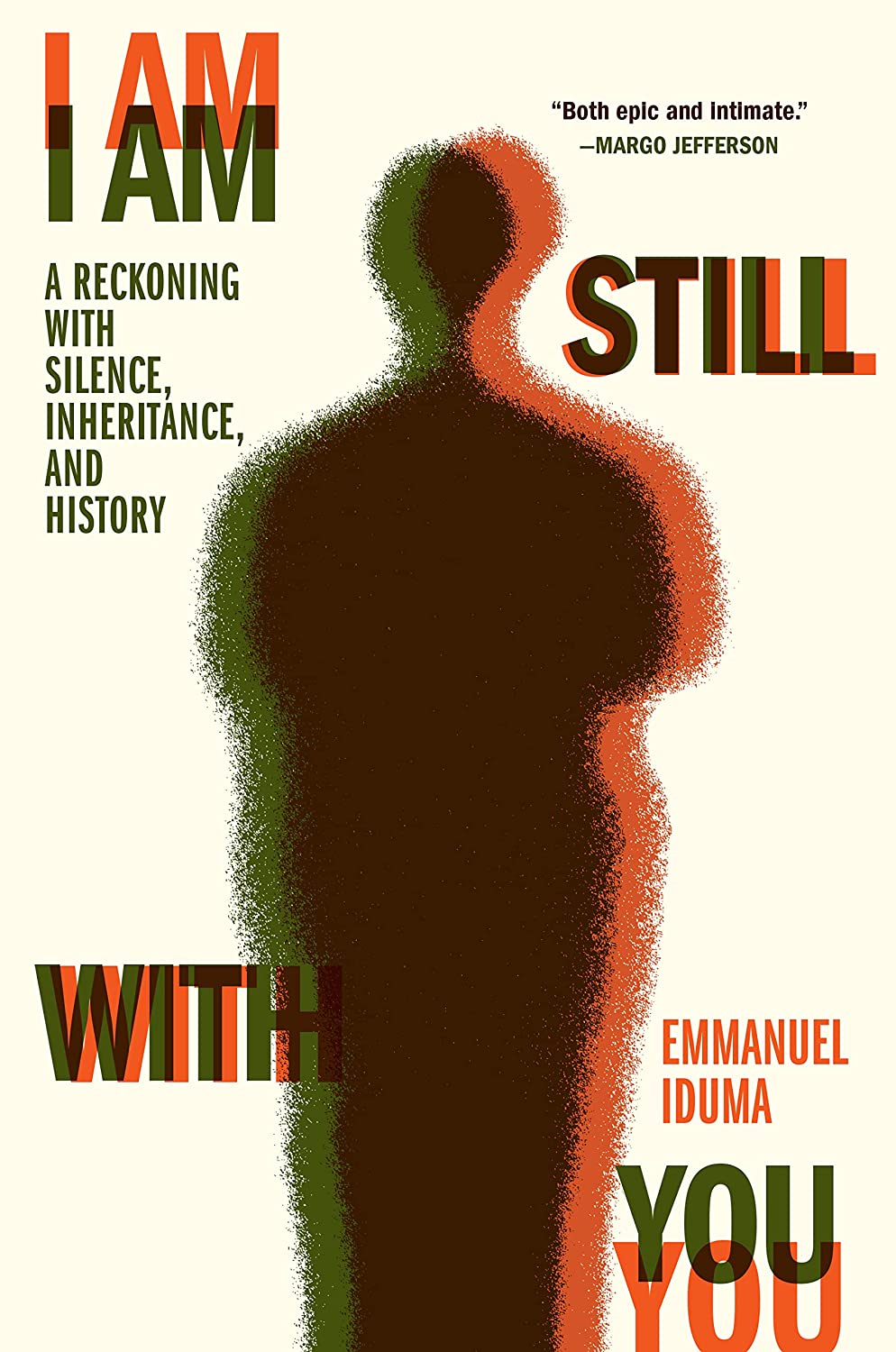
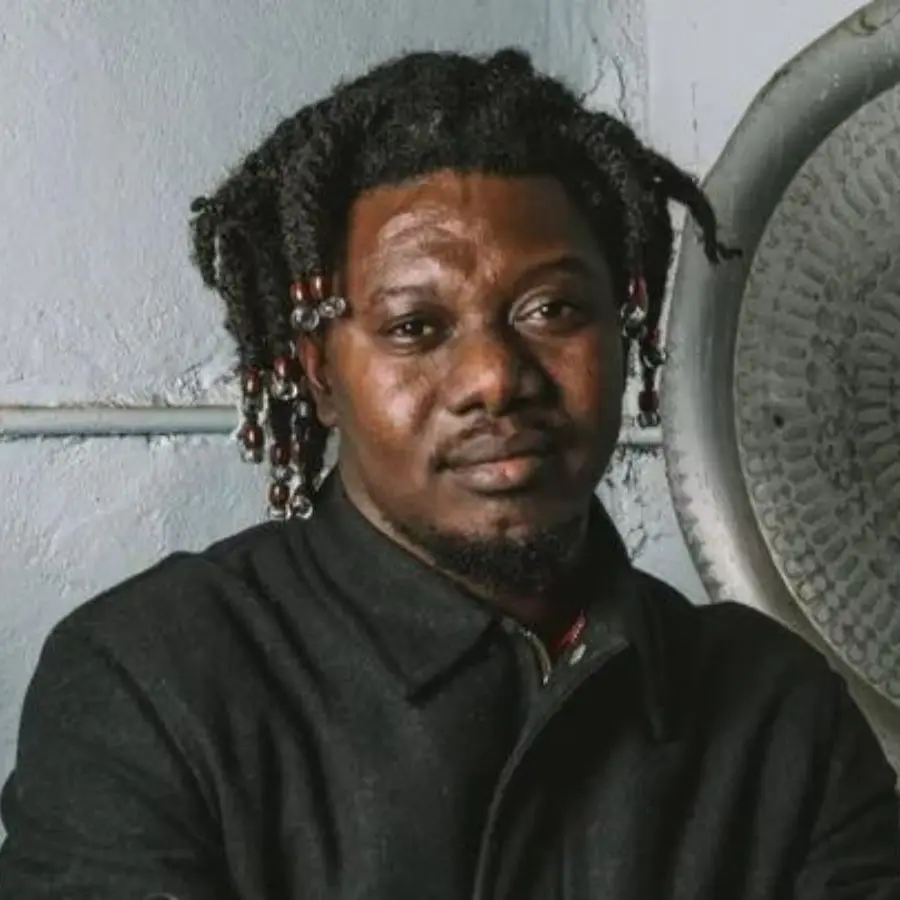
Emmanuel Iduma was named after his uncle, a man he never knew.
The uncle left home in 1967 to fight for Biafra. He did not come back. More than five decades later, Iduma begins looking for him, travelling from New York to southeastern Nigeria and moving through the places that shaped his family's history: Afikpo, Onitsha, Nsukka, Ojoto, Ahiara, Uli, Enugu, Umuahia and Aba.
There is something almost impossible about the assignment. What does one look for when the person has been dead for decades, the war that took him has acquired several competing histories, and the people who remember him cannot quite agree on what he looked like?
This is the difficulty that gives I Am Still with You its shape. Iduma sets out to recover a man and finds instead a history full of gaps, contradictions and unfinished stories.
The missing photograph becomes one of the book's most telling details. There is no image of his uncle left behind. Relatives describe him differently. Iduma eventually looks at photographs of his uncle's surviving siblings and tries to imagine the face that is missing from the family album. It is a small act, but it captures the larger problem of the memoir. The past is there, but rarely in the form in which one wants it.
That is especially true of Biafra. The war has generated an enormous literature, but literature is not memory and memory is not history. Iduma moves between all three. He brings Christopher Okigbo, Ojukwu and Nzeogwu into the story, visits the University of Nigeria in Nsukka and encounters the remnants of the Biafran archive. He also listens to relatives and strangers whose relationship to the war is less literary and much more immediate.
In Ojoto, Iduma goes looking for the river associated with Okigbo's "The Passage". The people around him do not necessarily recognise the name he has brought with him. They know the place by another name. The moment is quietly revealing. A place can enter literary history and remain something else to the people who live there.
His eye has something to do with his work as an art critic. He is interested in photographs, objects, images and the stories we construct around them. The absent photograph of his uncle becomes more than an unfortunate gap in the family record. A face can be preserved, but preservation is not the same thing as knowledge. When the image disappears, people begin supplying one from memory. They will not necessarily agree.
The family material is where the book has its greatest force. Iduma writes about his father, the Reverend Francis Agbi Iduma, and the relatives who helped raise his children while he was in the United States. He notices the older generation's silences, their habits of avoiding certain subjects, the ways grief enters ordinary family occasions without announcing itself.
There is a wedding. His stepmother cries. Nothing dramatic happens. Yet the scene carries the accumulated weight of people who have lived long enough with loss for it to become part of the furniture.
This is one of the things Iduma understands well: a war does not end simply because its soldiers stop fighting. People continue with their lives. They marry. They raise children. They go to work. They stop talking about things. Silence becomes one of the ways a family survives what it cannot repair.
For Iduma, that silence eventually becomes a question: what does a generation owe to an event it did not experience?
The question is complicated by the fact that Biafra is not dead as a political idea. Iduma's journey takes him into a southeastern Nigeria where the memory of the war remains tied to contemporary grievances and separatist agitation. His encounters with members of IPOB are among the book's more uncomfortable episodes. He is questioned about his motives. Why is he interested in Biafra now? What gives someone living abroad the authority to come looking for an old history? His imperfect Igbo only makes the distance more obvious.
These encounters puncture the neatness of the memoir's premise. Iduma is not simply returning home to retrieve a forgotten family story. He is entering a political landscape in which the history he is researching is still being argued over.
Iduma is more convincing when he writes about the private afterlife of Biafra than when he tries to make sense of its contemporary political expression. He understands the persistence of grievance, but the political questions sometimes remain at the level of encounter rather than becoming sustained inquiry. The reader is left with the sense of a larger argument just outside the frame.
That limitation is worth noticing because the memoir begins in the shadow of another episode of Nigerian state violence. Iduma's account of EndSARS in Lagos places the civil war beside a more recent history of protest and repression. He clearly does not regard Biafra as a sealed chapter. Yet the connection is more suggestive than fully worked through.
His conversations with Ayobami Adebayo offer another way into the question. They consider people who inherit the consequences of wars they never fought, and the younger generation's complicated relationship with Biafra. The subject is familiar enough by now, but Iduma's family position gives it some particular force. He is trying to understand not only what happened to his uncle, but what happens to an event when those who inherit it have no direct experience of it.
This is also where the title gathers its meanings. "I Am Still with You", drawn from Psalm 139, initially suggests divine presence. In the memoir it becomes more intimate. The missing uncle remains in the family story; the dead remain in the habits and recollections of those who survived them; Biafra remains in the political vocabulary of the southeast.
What makes the book worthwhile is that Iduma does not manufacture the discovery his journey seems to promise. There is no definitive account of his uncle. No photograph appears to settle the question of his face. The family memories remain inconsistent.
Instead, the search changes scale. A missing relative leads into the history of a war, and the history of that war leads back into the ordinary lives it altered. Iduma's strongest writing comes when he stays close to those lives: the family photograph, the wedding, the father's memories, the old silences, the awkward conversations with people who have their own reasons for distrusting his questions.
The result is an uneven but thoughtful memoir. Its intimate sections have a delicacy that its political sections sometimes lack. Iduma is especially persuasive when he treats history not as something waiting to be recovered intact, but as something people have carried imperfectly from one generation to another.
That may be the book's most useful contribution. Not another account of what Biafra was, but an examination of what remains when an event as large as Biafra enters a family and refuses to stay there.
 WhatsApp
 X
X
 Facebook
 LinkedIn