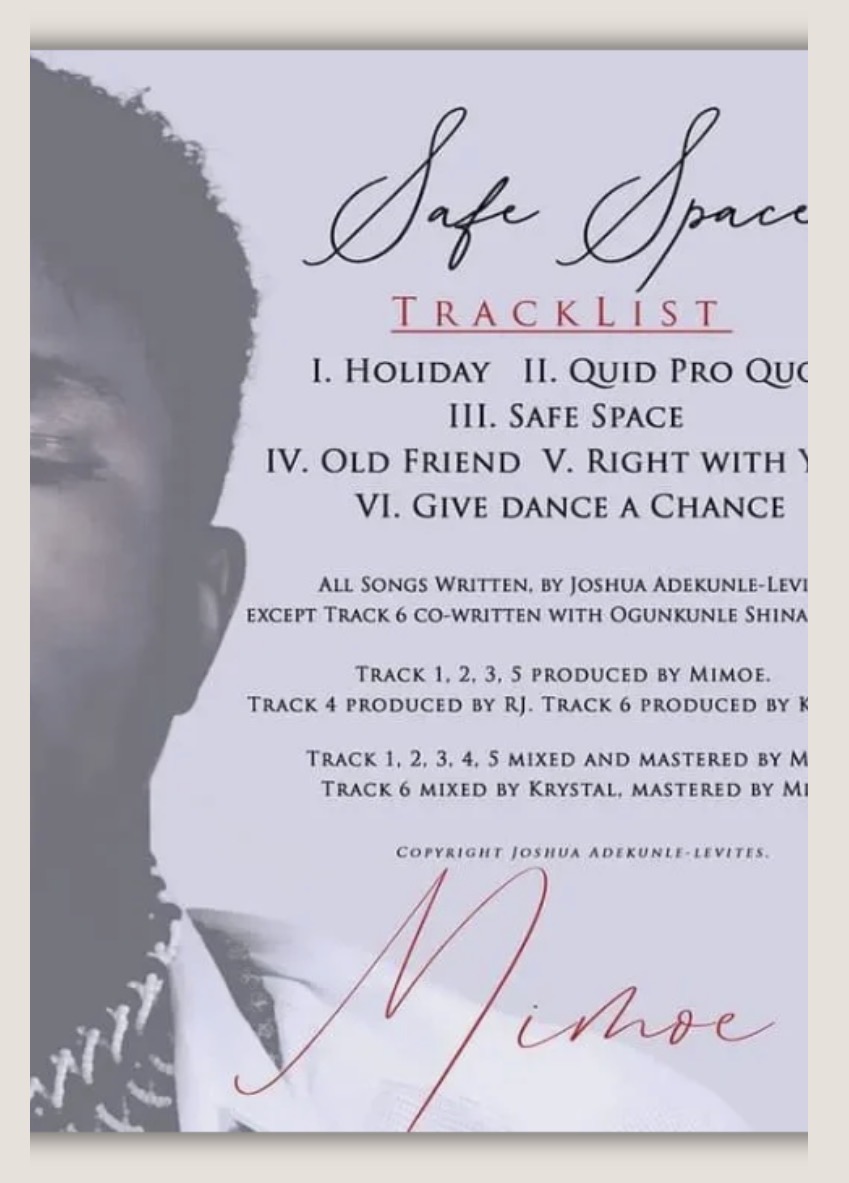
Mimoe, the soulful singer, impeccable storyteller and motivator, recently released a new project. The project comes with a change of name, a stark departure from what he is known for and an optimum exploration of sounds and tropes.
At the end of the 16-minute play, Mimoe made sure he touched almost all the topics. From love and friendship to loneliness, nostalgia and the need for human connection, he squeezes a lot into a short project. If the mandate was to show his versatility and reach beyond the audience that already knows him, he achieved that and had an extra mark.
In a world rife with conversations about loneliness and mental health, human beings always need people around them. When you have people like that, hold them right. Mimoe sermonises on “Quid Pro Quo”, a song about the give-and-take that comes with human relationships. It is one of the project’s more thoughtful moments, although Mimoe sometimes leans more heavily on the message than the music itself.

On the title track, “Safe Space”, the former gospel singer is on a restitution mission. Now on his knees, he seeks forgiveness from his better half. Just like the subject matter, the beat is sombre; not even the thumping guitar and shattering drums can completely resuscitate the mood. The arrangement matches the weight of the subject, but the heaviness also makes the song one of the project’s less immediate moments.
When Mimoe sings, you picture a prime John Mayer and a vintage John Drille at work. On the piano-driven “Old Friend”, Mimoe is reflective about the past while looking forward to the future. His vocals and the instrumentals compete for attention, with neither willing to take a back seat. It is one of his stronger performances, although the song’s reflective mood is familiar territory for him.
Mimoe sings mostly in English, but the project is sprinkled with African elements. “Right With You” rides on an Agbamole beat, tapping into childhood memories and nostalgic, love-like themes. The track evokes memories, especially for Generation Z listeners who grew up around these sounds. Its nostalgia gives the project another texture, even if the familiar approach makes it less adventurous than some of the other moments.
“Give Dance A Chance” ends the project with Mimoe taking listeners to the dance floor. Picture nightcrawlers at Quilox or Muri Okunola Park; the reflective singer suddenly becomes your companion for the night. It is a welcome change of pace and a reminder that Mimoe is not trapped in one emotional lane, though its dancefloor appeal is more functional than revelatory.
Across 16 minutes, Mimoe moves between introspection, romance, nostalgia and celebration without allowing any single identity to completely swallow the other. The project does not reinvent every sound it touches, and some of its ideas feel more familiar than others, but its greatest strength is the willingness to explore.
Mimoe might have switched from gospel to pop, but Safe Space is not a complete abandonment of the qualities that made his earlier work appealing. Instead, it is a modest fusion that gives him room to explore different sides of himself. For a first-time listener, it is an introduction to his versatility; for older fans, it is a beautiful addition to an already intimidating discography.
Mimoe has changed the sound and perhaps the name, but the storyteller is still here.
 WhatsApp
 X
X
 Facebook
 LinkedIn