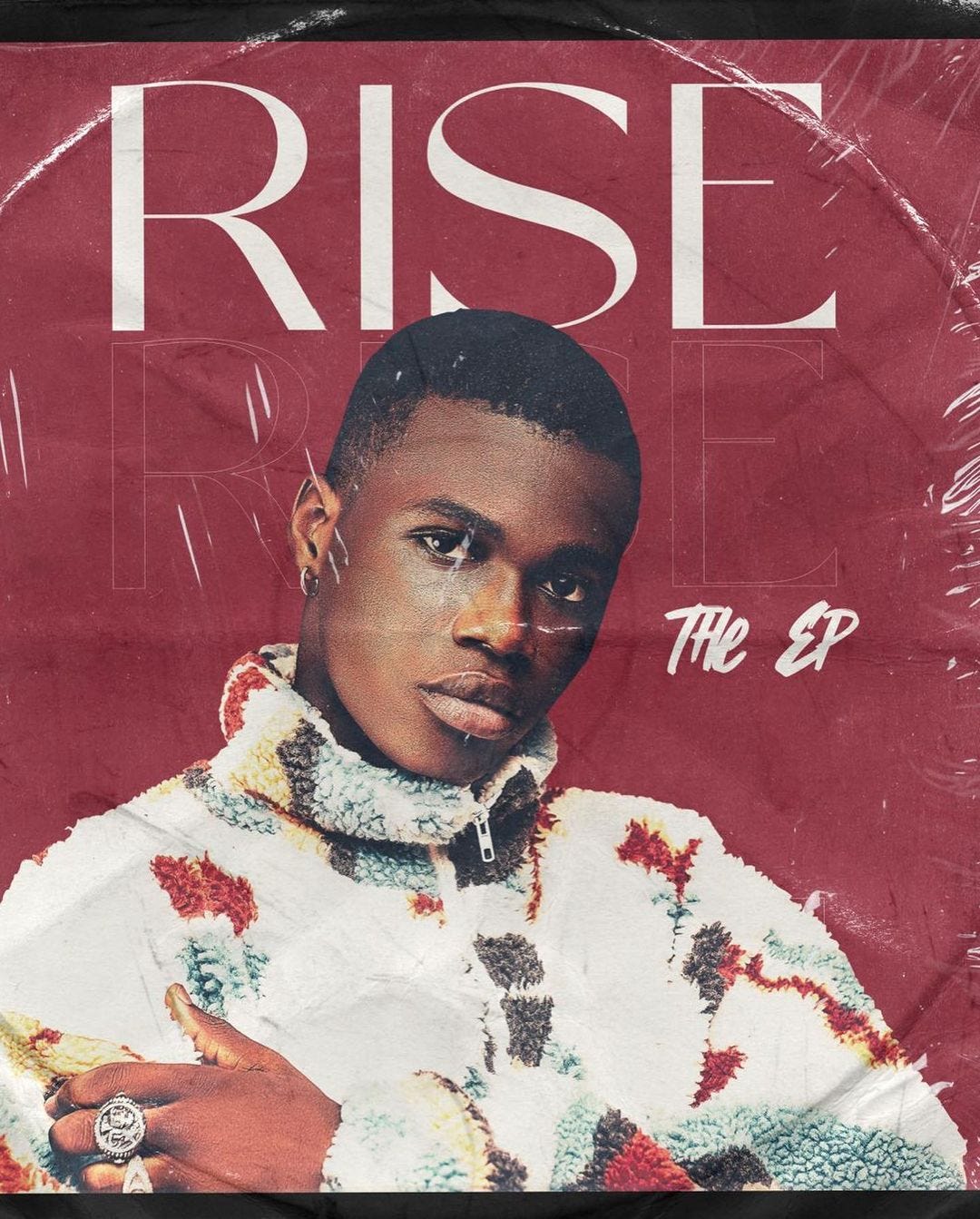
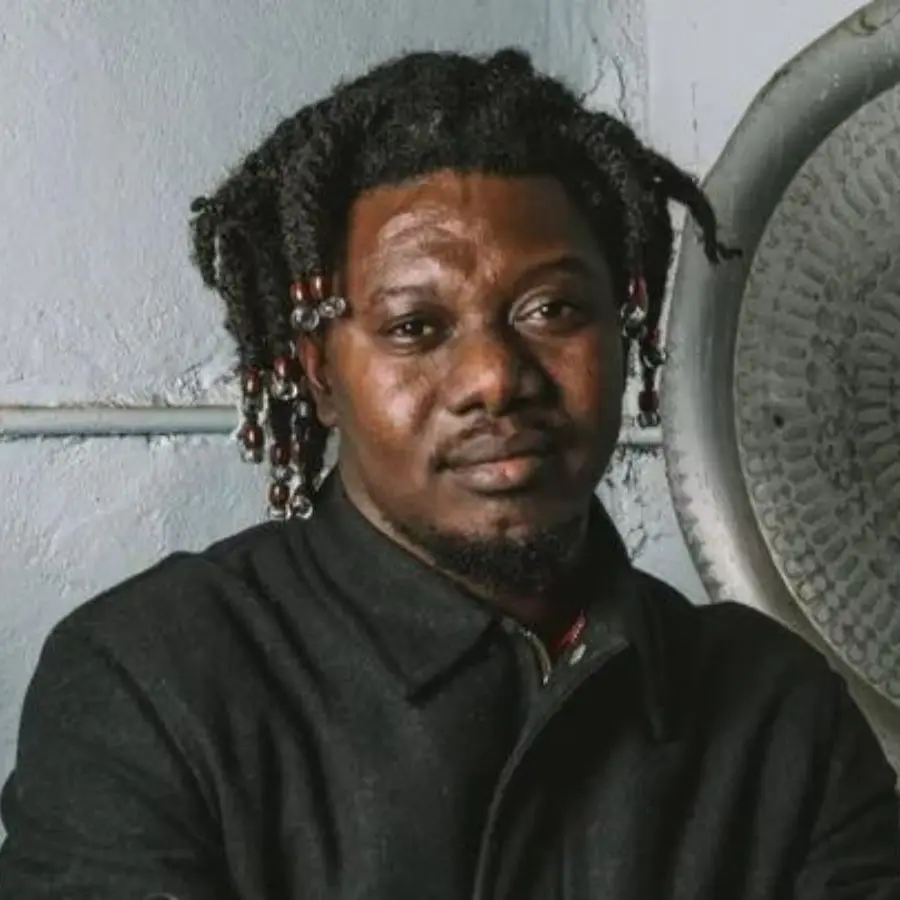
Right now, the hustler anthem seems to be the go-to type of song for Nigerian youth. Some musicians have made this their forte: Barry Jhay, T.I Blaze, Seyi Vibez and, recently, T Dollar, whose government name is Olabinjo Ayotunde Quam.
The Rapidbeatz- and Olumix-produced “Rise” has catapulted the singer into the mainstream. He has never rested on his oars; he has been milking the song. Two weeks ago, he returned with a six-track extended play, Rise.
Money, prosperity and success form the foundation of this project. From the opening track, “If,” to the closer—the eponymous “Rise”—he is obsessed with making money. There is nothing inherently wrong with an artist repeatedly returning to the subject of hustle. For a young Nigerian audience navigating unemployment, financial pressure and the desire for upward mobility, the hustler anthem has become a familiar soundtrack. But for T Dollar, the problem is not the subject itself; it is how little he does with it.
When he talks about his struggles, as he does on the Harrysongz- and Oladips-assisted “Our Father,” he is quick to plead for more money, paint the town red and taunt the people who never believed in him. The sentiments are familiar, but the EP rarely pushes beyond them. There is little curiosity about what happens after the hustle, what the struggle costs, or what success means beyond the accumulation of money.
The songs on this EP are repetitive, not because T Dollar is trying to lay emphasis, but because of the level of levity deployed throughout the project. The same ideas, emotions and lyrical postures keep resurfacing without enough variation to make the six tracks feel like distinct statements. I doubt if they even employ an A&R to guide him in topic selection.
“Our Father” and “Rise” are distant cousins. Both songs lean heavily on the same emotional and thematic terrain: struggle, prayer, money and the vindication that comes with success. Instead of using the EP to show another side of himself after the success of “Rise,” T Dollar repeatedly returns to the same well.
When he tries his hand at Amapiano on “No Stress,” T Dollar still uses the “Rise” template. The change in production does little to alter the substance. The beat may provide a different backdrop, but the songwriting remains trapped within the same narrow worldview. This is where the EP begins to feel less like an attempt to explore his artistry and more like a vehicle for reproducing what has already worked.
And that is the central problem with Rise: the title track looms over everything else. Rather than using the momentum of “Rise” as a launching pad, T Dollar appears to have built the entire project around the song’s existing formula. There is an opportunity here to introduce new sounds, subjects and dimensions to his personality, but he largely chooses familiarity.
“Rise” is restrictive. It fails to show the dynamism of T Dollar; rather, it exemplifies the fact that he and his record label released this project to keep his single “Rise” in conversation, increase its streaming figures and rake in more shows in December.
That commercial calculation is understandable. A breakout single creates momentum, and artists and labels naturally want to maximise it. But a six-track EP should also give listeners a reason to believe that there is more to the artist than the song that brought him into the mainstream. On Rise, that promise is difficult to find.
The EP therefore leaves T Dollar in roughly the same place where “Rise” found him. We hear a young artist who understands the appeal of the hustler anthem and knows how to package its familiar themes, but not yet one who seems interested in stretching beyond them.
If the aim of this project was simply to milk the success of “Rise,” then T Dollar may have achieved his objective. If the aim was to shape his artistry and announce a more expansive version of himself, then it’s safe to say that T Dollar got F9 parallel.
 WhatsApp
 X
X
 Facebook
 LinkedIn